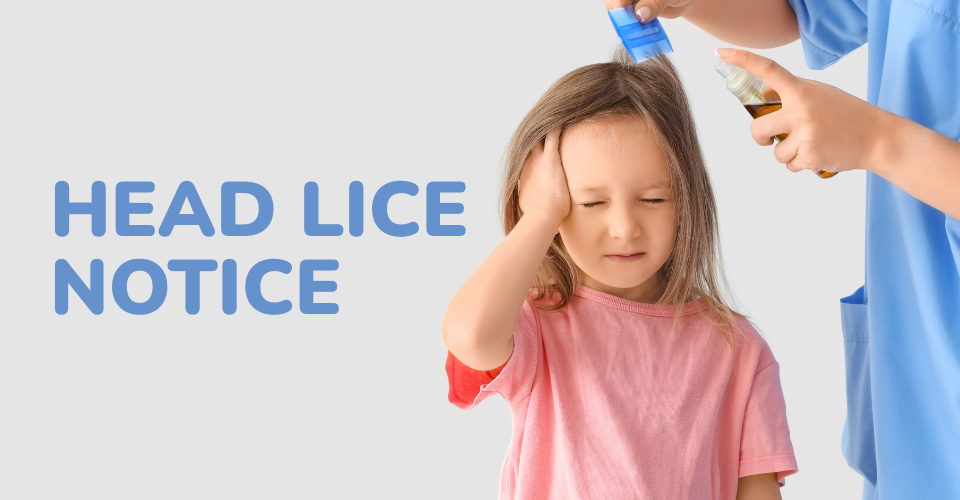
We would like to inform you that cases of head lice have been identified among some students at our school. We are providing the following information and guidelines to help prevent and manage this issue and ensure the health of all children.
What Head Lice Are:
Head lice are small parasites that live in human hair and feed on blood from the scalp. They cause itching and irritation but do not spread serious diseases. They are mainly transmitted through direct head-to-head contact or by sharing items such as combs, hats, hair accessories, or pillows.
Important Note:
Children with head lice are not excluded from school. Attendance is encouraged while families treat and manage the infestation.
Signs That a Child May Have Head Lice:
How to Check Your Child:
Precautions to Take:
How to Treat Head Lice:
Early detection and treatment are important to prevent the spread of lice. Please check your children promptly and follow the guidelines above.
Thank you for your cooperation. For any questions or clarifications, you may contact the school nurse at fmustafa@isl.cy
Sincerely,
Fiorendina Moustafa
School Nurse
The Island Private School
What Head Lice Are:
Head lice are small parasites that live in human hair and feed on blood from the scalp. They cause itching and irritation but do not spread serious diseases. They are mainly transmitted through direct head-to-head contact or by sharing items such as combs, hats, hair accessories, or pillows.
Important Note:
Children with head lice are not excluded from school. Attendance is encouraged while families treat and manage the infestation.
Signs That a Child May Have Head Lice:
- Itching on the scalp, especially behind the ears or at the nape of the neck.
- Small white specks in the hair (nits) that are difficult to remove.
- Visible lice – small, grayish or brown parasites moving on the scalp.
- Red or irritated spots on the scalp caused by scratching.
How to Check Your Child:
- Carefully comb the hair with a fine-toothed lice comb, ideally one designed for removing lice.
- Focus on areas behind the ears and at the nape of the neck.
- Check in good lighting, sectioning the hair into small parts.
Precautions to Take:
- Inform the school if lice are detected so we can take appropriate measures.
- Avoid sharing personal items that come into contact with hair.
- Teach children not to exchange hats and combs.
How to Treat Head Lice:
- Special lice shampoos and treatments are available at pharmacies. Follow the instructions carefully.
- Comb hair thoroughly to remove lice and nits.
- Wash clothes, bedding, and hats that came into contact with the child in hot water and dry them thoroughly.
Early detection and treatment are important to prevent the spread of lice. Please check your children promptly and follow the guidelines above.
Thank you for your cooperation. For any questions or clarifications, you may contact the school nurse at fmustafa@isl.cy
Sincerely,
Fiorendina Moustafa
School Nurse
The Island Private School